Mudjacking vs. Polyjacking in Minneapolis: Honest Comparison
Mudjacking vs. polyjacking for Twin Cities concrete: how each method works, real local costs, when mudjacking still makes sense, and how to read your quote.
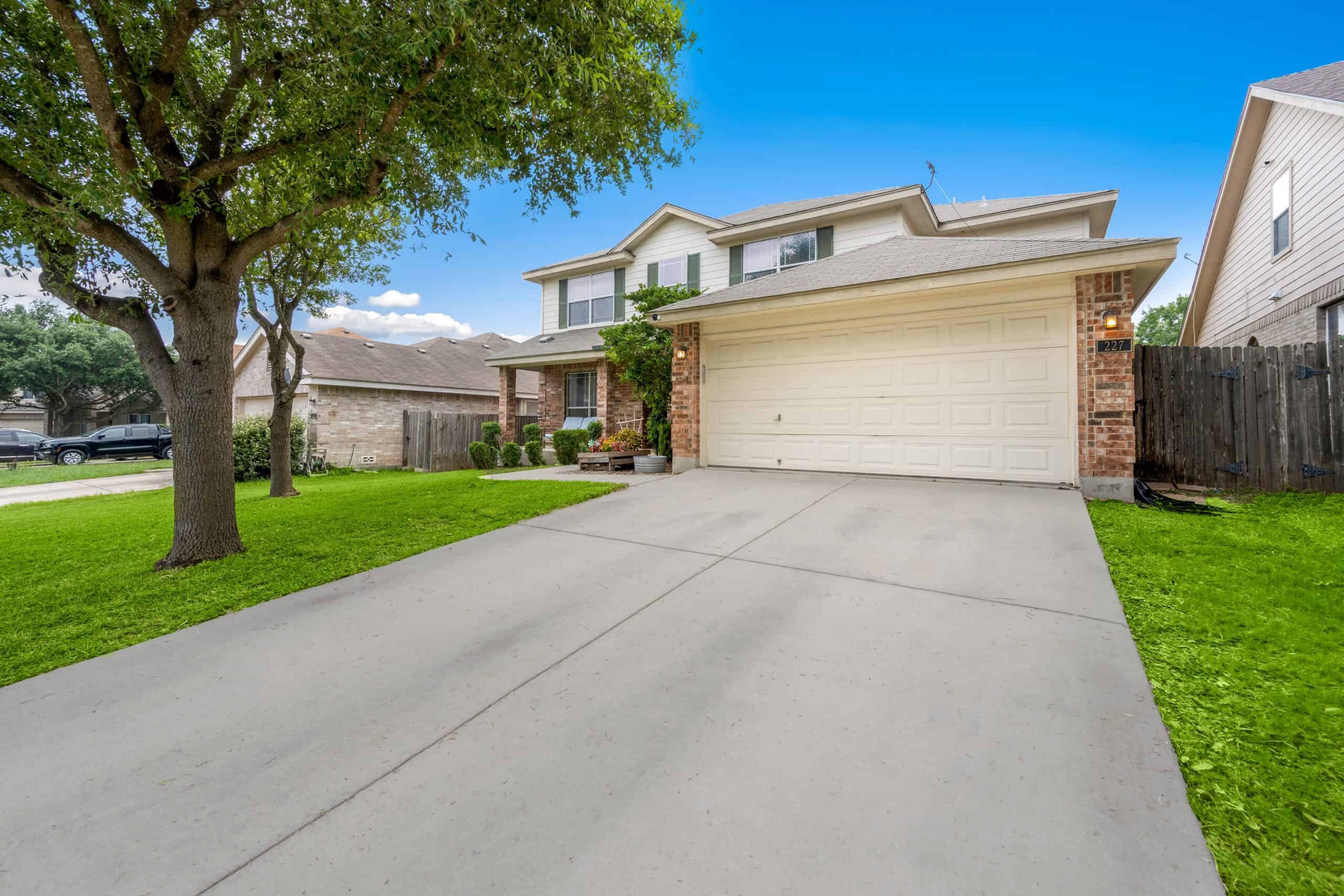
If your driveway has a corner that’s dropped an inch, your sidewalk dips toward the house, or your garage apron is starting to look like a ski slope, you’ve probably heard the two words: mudjacking and polyjacking. They’re the main alternatives to tearing out the slab and pouring new. Once you start getting quotes, the mudjacking vs. polyjacking question is the one almost every Twin Cities homeowner gets stuck on.
For most Twin Cities homes, polyjacking is the better long-term call. The foam weighs almost nothing compared to slurry, so you’re not piling more weight on the soil that has settled over time. It cures in 15 minutes instead of days, ensuring slabs stay in place. And it holds up to the freeze-thaw cycles that wreck concrete here. Mudjacking still has a place in some specific situations, and we’ll tell you where.
Most articles on this topic are sales pitches dressed up as comparisons. This one isn’t. We do polyjacking, and that’s our specialty. But we’ll be straight with you when mudjacking is the better fit. You’ll get real numbers on what both methods cost in the Twin Cities, and you’ll learn how to read a contractor quote so you can tell what you’re paying for.
Why This Comparison Plays Out Differently in Minnesota
Many “mudjacking vs. polyjacking” articles online are written by contractors in Southern climates. Places where the ground basically stays put. Minnesota isn’t one of those.
Three things make this part of the country brutal on concrete, and they’re the same three things that change the math between these two methods.
- A 42-inch frost depth. That’s the official frost line for residential construction in the southern half of the state, per the Minnesota State Building Code. The code exists because the ground here freezes deep enough every winter to lift anything that isn’t anchored below it. Frost heave isn’t a rare event in Minnesota. It happens every year. Slabs get pushed up in winter and resettle, often unevenly, when things thaw.
- Clay-heavy soils across much of the metro. Glacial till with clay lenses runs through neighborhoods like Powderhorn, parts of St. Louis Park, Lakeville, and Maple Grove. Sandier soil shows up in places like Woodbury and around Cedar-Isles. Clay holds water, swells when it gets it, and shrinks when it doesn’t. During a freeze, it grips onto anything embedded in it. It’s the worst soil you can have under a slab.
- Heavy snowmelt and spring rain. All that water runs through the soil under your concrete every spring. Anything erodible down there breaks down faster than it would in a dry climate.
Stack those three together and you’ve got the core problem with traditional mudjacking in Minnesota. It piles weight onto soil that’s already stressed, and the slurry doesn’t hold up well to all the water moving through it. Polyjacking was developed, in part, to solve that. Which is why this comparison shakes out differently here than it does in most of the country.
How Mudjacking Works
Mudjacking has been around for more than 80 years. It’s the original concrete lifting method, and for a long time it was the only one available.
The process is straightforward. A contractor drills 1.5 to 2-inch holes in the sunken slab. A hydraulic pump then pushes a slurry through those holes. The slurry is a combination of mostly water, sand, soil, and Portland cement. As the slurry fills the void under the slab, it pressurizes and lifts the slab back toward level. Then the holes get patched.
The slurry has to cure. That takes 24 to 72 hours before the slab can take traffic. If it’s your driveway, you’re parking on the street for a few days. A commercial loading dock means you’re shut down for that long.
Mudjacking has real strengths. The method has been refined over decades, the materials are cheap, and a skilled crew can tune the slurry for serious compressive strength. The problem in Minnesota is that the same slurry is heavy, slow to cure, and easily eroded by groundwater. It also won’t last as long here as it would in a dry climate. We’re frequently called out to look at previously mudjacked slabs that have settled again, sometimes only 1-2 years after the original repair.
How Polyjacking Works
Polyjacking is the modern method to lift, support & stabilize concrete. The basic principle is the same as mudjacking. You inject something underneath the slab to raise it. The material and engineering are completely different.
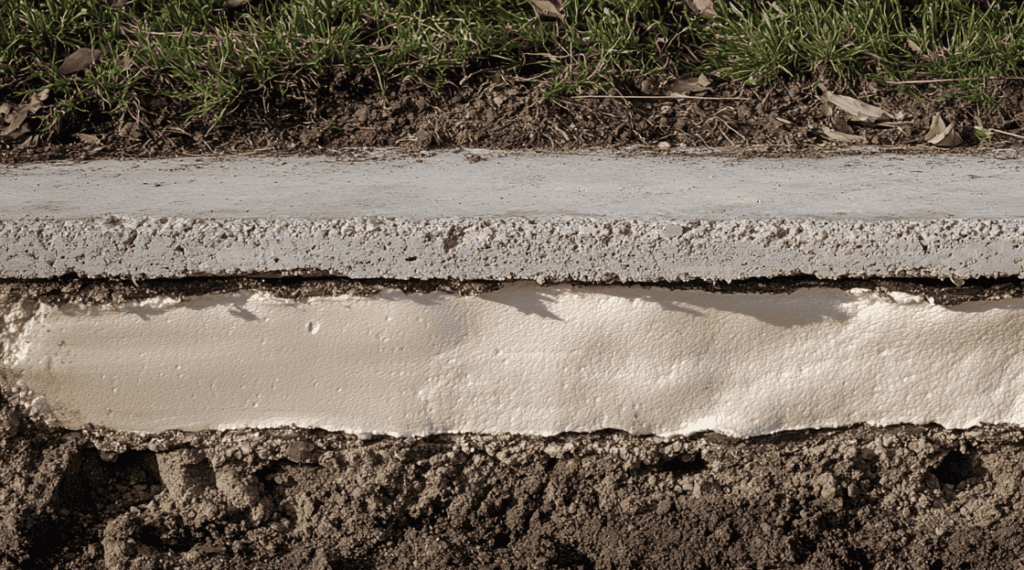
Instead of slurry, polyjacking uses high-density polyurethane foam. It’s a two-part chemistry that mixes in real time as it’s injected through small ports about the size of a dime. The foam expands underground, fills voids in the soil, compacts the subgrade, and pushes the slab back up. The contractor watches the lift happen in real time and stops injecting as each slab reaches its desired position.
Cure time is roughly 15 minutes. By the time the truck is packed up, you can drive on it.
The foam is hydrophobic, which means it doesn’t mix with water. Groundwater moving through the soil won’t break it down or wash it out. And it weighs almost nothing. About 2 to 4 pounds per cubic foot, compared to 100 to 150 pounds per cubic foot for mudjacking slurry.
That weight difference matters more than it sounds. Most slabs sink because the soil underneath couldn’t support what was on top. Adding another 100+ pounds of slurry per cubic foot doesn’t fix that problem; it just delays the next round of settling. Polyurethane foam barely adds to the load at all.
For what it’s worth, the U.S. Department of Transportation prefers polyurethane foam over mudjacking for fixing dips and settling on highways. Federal infrastructure isn’t your driveway. But if it’s the right tool for an interstate, it’s probably overkill in a good way for a residential slab.
Mudjacking vs. Polyjacking: Side-by-Side Comparison
Here’s the head-to-head:
| Mudjacking | Polyjacking | |
| Material | Cement, sand, water, soil slurry | High-density polyurethane foam |
| Material weight | ~100–150 lbs per cubic foot | ~2–4 lbs per cubic foot |
| Hole size | 1.5–2 inches | 5/8 inch (dime-sized) |
| Cure time | 24–72 hours | ~15 minutes |
| Compressive strength | 200–2,400 PSI (variable) | 80–100 PSI (consistent) |
| Water resistance | Vulnerable to erosion | Hydrophobic; unaffected |
| Typical lifespan | 2–10 years | 10–30+ years |
| Cost per square foot | $3–$10 | $5–$25 |
Weight
This is the biggest engineering difference, and it’s the one most homeowners don’t think about until somebody points it out. If your slab sank because the soil couldn’t hold what was on top, then putting another 100 pounds of slurry per cubic foot underneath is solving the symptom while making the underlying problem worse. Polyurethane adds almost no load, which is why it tends to last so much longer in unstable soil.
Compressive strength
Mudjacking can be tuned to higher PSI than polyjacking, which sounds important until you realize that 80 to 100 PSI is more than enough for any residential application and most commercial ones. Driveways, sidewalks, garage floors, parking lots, warehouse aprons. None of these load the substrate anywhere near 80 PSI under normal use. The PSI advantage of mudjacking really only kicks in for specialty heavy-industrial work.
Lifespan
Both numbers are ranges for a reason. Mudjacking can last close to a decade in stable soil with good drainage. It can also fail in three years if the slurry gets washed out by groundwater. Polyjacking is much more consistent. High-density polyurethane foam is engineered for long-term stability, does not erode like slurry and doesn’t pile on weight. It still needs a structurally sound slab and decent drainage to do its job.
Cost per square foot
Polyjacking is more expensive upfront. Over a 10 to 15 year window, when you factor in the likelihood of having to redo a mudjacking lift, the math usually flips.
Where Mudjacking Can Still Make Sense
You want the lowest possible price right now and you’re okay with a shorter-lived repair
Mudjacking is cheaper to install. If you’re laser-focused on upfront cost and you don’t mind redoing the work in a few years, it’s a reasonable choice. The catch in Minnesota is that the freeze-thaw cycle tends to shorten mudjacking’s lifespan, so a “cheaper” fix often costs more across a 10-year window than polyjacking would have. If you’re staying in the house, polyjacking usually wins on lifecycle cost. If you’re prepping to sell within a year or two, the math might tilt the other way.
For almost every other project, polyjacking is the better answer.
Why Polyjacking Is the Right Call for Almost Every Twin Cities Property
Those are the exceptions. These are the slabs polyjacking was built for.
Driveways
The most common job we do. Driveways settle at the apron, at the garage interface, or in the middle where the soil’s been wettest. Polyjacking lifts them cleanly, the lift cures fast, and the slab holds up against frost heave year after year.
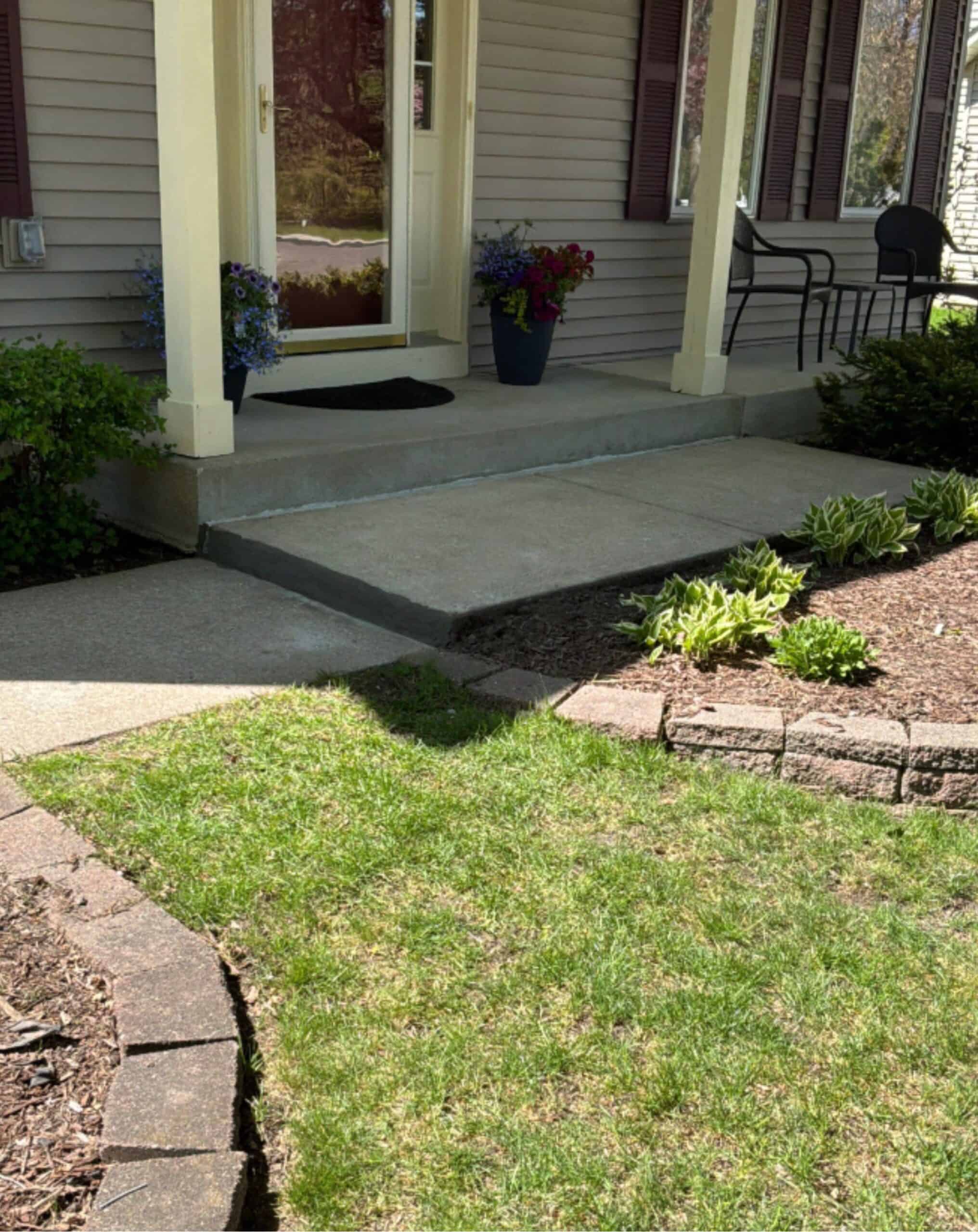
Sidewalks and walkways
These tend to settle in individual slabs and create trip hazards. Polyjacking lifts each slab precisely, and the smaller holes disappear into the patch.
Garage aprons and floors
The transition between driveway and garage is one of the worst spots in Minnesota. Heavy use, road salt, freeze-thaw cycles, and water tracking from outside. Polyjacking handles it.
Front stoops and steps
Settlement near the foundation is common, and the lightweight foam matters here especially. The soil immediately around your foundation is often the most sensitive area on the property.
Patios and pool decks
Smaller injection holes are a real aesthetic win on visible decorative concrete.
Commercial slabs
Warehouse floors, office buildings, retail aprons, parking lot slabs. All standard polyjacking work. And there’s an added benefit on the commercial side. Interior work isn’t subject to the seasonal limits exterior work is.
If your slab is structurally sound, meaning it’s not extensively cracked, spalled, or crumbling, and it’s settled because the soil under it shifted, polyjacking is almost certainly your answer.
What Concrete Lifting Actually Costs in the Twin Cities
Most articles on this topic give you a square-foot range and call it good. That’s not useful when you’re trying to figure out whether to budget $1,200 or $4,000.
Mudjacking on a typical Twin Cities residential job runs roughly $590 to $1,825, with most homeowners landing around $1,155, according to current local cost data. That works out to about $3 to $10 per square foot.
Polyjacking on the same kind of job runs $800 to a few thousand dollars, depending on size and complexity. That’s about $5 to $25 per square foot.
Here’s a worked example. Take a typical 400-square-foot Twin Cities driveway lift, say a two-car drive that’s settled an inch at the apron. That usually lands somewhere in the $1,500 to $3,500 range for polyjacking, depending on how much lift is needed and how many voids the foam has to fill. Mudjacking on the same job might quote $1,200 to $2,500. That’s a polyjacking premium of roughly 20 to 40%. In our experience, it pays for itself the first time you don’t have to redo the job.
What pushes the price up or down:
- Slab size: Bigger slabs need more material.
- Lift height: A half-inch correction requires less foam than a two-inch lift.
- Voids vs. simple settlement: If there are large cavities under the slab, those have to be filled before any actual lifting starts.
- Accessibility: Tight backyards, fenced areas, or anything requiring equipment to be hauled a long distance.
- Soil conditions: Stable subgrade is straightforward; wet, soft, or extensively voided soil requires more foam.
What about replacement? Tearing out and pouring new concrete costs roughly 2X – 3X what polyjacking does (depending on the job size). And that’s before you account for landscaping damage, noise, and days to weeks of unusable concrete (removal, pouring & curing). For a 400-square-foot driveway, replacement can easily run $6,000 to $10,000+. Lifting wins on cost in nearly every case where the slab is still structurally sound.
A real estimate should itemize the work, call out work areas, material needed, and any accessibility notes. Vague flat-rate quotes without site detail are a red flag.
When to Schedule Your Concrete Lifting Project in Minnesota
For residential exterior work in the Twin Cities, late spring through fall is the sweet spot. Most Twin Cities polyjacking work happens between April and November, when ground temperatures are stable above freezing and the weather cooperates with the chemistry.
Polyjacking has a real cold-weather edge over mudjacking. Heated equipment and insulated lines let us work in cooler conditions, and the foam reaction is far less weather-sensitive than slurry curing. Mudjacking is basically out of the picture in a Minnesota winter, since the slurry can’t cure properly below freezing. So even in marginal shoulder-season weather, polyjacking has more room to operate.
If you’re noticing settlement in late winter, get an estimate now. That includes January, February, or early March. You don’t have to wait until the weather turns. The best contractors fill up fast once spring hits, and getting on the schedule early means your project happens in April or early May rather than waiting until July. An off-season estimate locks in your spot and lets you plan.
Indoor and commercial work runs year-round. Warehouse floors and other indoor concrete in climate-controlled buildings aren’t subject to the same temperature constraints as outdoor driveways and sidewalks. If you’re a property manager dealing with a settled warehouse floor, an indoor industrial pad, or any commercial slab in a heated space, polyjacking can be scheduled regardless of what’s happening outside. We do commercial and industrial concrete lifting through the winter on a regular basis.
How to Tell What Method Your Quote Is Actually Using
Concrete lifting has more names than it needs. Some are interchangeable, some aren’t. Here’s how to decode the terms.
- “Mudjacking” or “slab jacking”: almost always refers to traditional cement-slurry lifting.
- “Concrete leveling”: a generic term that could mean either method. Ask which.
- “Polyjacking” or “foam jacking”: polyurethane foam.
- “PolyLevel®”: a branded polyurethane product. Not all polyjacking uses PolyLevel, but the underlying method is the same regardless of brand.
- “Aggregate jacking”: a regional variant using crushed-stone slurry. Closer to mudjacking than polyjacking in behavior.
When you’re getting quotes, ask three questions of any contractor:
- What material are you injecting? Cement slurry or polyurethane foam.
- What’s the hole size? 1.5 to 2 inches means mudjacking. 5/8 inch means polyjacking.
- What’s the cure time before I can use the surface? 24 to 72 hours means mudjacking. 15 minutes means polyjacking.
If you get vague answers, that’s the answer.
When to Lift vs. When to Replace
Polyjacking and mudjacking both lift concrete. Neither one fixes concrete that’s structurally compromised.
Lifting is the right call when:
- The slab is settled but otherwise intact
- Cracks are minimal or hairline
- The surface is in reasonable condition
- The cause is soil settlement or void formation, not slab failure
Replacement is the right call when:
- The slab is extensively cracked or broken into multiple pieces
- The surface is spalling, flaking, or deteriorating
- Rebar is exposed or rusted
- There’s significant tree-root damage from underneath
The rough rule of thumb is this: if your slab is structurally sound, lifting costs about half what replacement does and the lift lasts as long as the slab itself. If the slab is failing, no amount of lifting will save it.
A good contractor evaluates this honestly during the estimate. At Duranova Concrete Lifting, the first thing we do on any free estimate is check whether your concrete is actually a candidate for lifting. If it isn’t, we’ll tell you. There’s no point selling you a polyjacking job on a slab that needs to be torn out.
Getting a Straight Answer About Your Sinking Concrete
Duranova is a Twin Cities polyjacking specialist. We do this and only this, across residential, commercial, and municipal work throughout the Minneapolis metro. If you’ve got sinking concrete and you want a straight answer about whether lifting makes sense for your specific situation, we’ll come out, look at it, and tell you.
A free estimate takes about 20 to 30 minutes on site. We measure the affected area, take a look at the drainage and soil conditions around it, figure out whether you’re dealing with simple settlement or larger voids underneath, and walk you through what the project would cost and how long it would take. There’s no pressure and no obligation. If you decide to get a second opinion or hold off, that’s fine. If your slab isn’t a fit for lifting at all, we’ll tell you that too and point you in the right direction.
Frequently Asked Questions
Is polyjacking better than mudjacking?
For most Twin Cities properties, yes. Polyjacking is lighter, lasts longer, and stands up much better to the freeze-thaw cycles that define Minnesota soil. It also cures faster. Mudjacking still works in some narrow cases, like the lowest-possible-budget jobs, very large industrial void fills, and a few specialty heavy-load applications. For the typical residential or commercial slab, though, it’s the wrong tool.
How long does mudjacking last?
Anywhere from 2 to 10 years, depending on soil conditions, drainage, and climate. In Minnesota’s freeze-thaw soil, the lower end of that range is more common than the upper end. Water movement and soil shifting tend to undermine mudjacking faster here than in dry climates.
How long does polyjacking last?
Typically 10 to 30+ years, and often longer. The foam itself doesn’t break down. It’s chemically inert and waterproof. The thing that determines lifespan isn’t the foam at all. It’s whether the soil and drainage around it stay stable over time.
Is polyjacking worth the higher cost?
For most homeowners, yes. The upfront premium is usually 20 to 40% over mudjacking, but polyjacking typically lasts several times longer. If you’re staying in the property, the lifecycle math favors polyjacking almost every time. If you’re prepping to sell within a year or two, mudjacking might pencil out.
Will my concrete sink again after polyjacking?
The polyjacked slab itself is stable, since the foam doesn’t degrade or shift. What can cause new settlement is movement in the deeper soil that wasn’t addressed by the lift. If there’s an active drainage issue, a buried leak, or significant subgrade movement nearby, those need to be fixed too. A thorough estimate identifies these factors before we start.
How much does it cost to lift a concrete driveway in Minneapolis?
A typical 400-square-foot driveway lift runs $1,500 to $3,500 for polyjacking, depending on lift height and void volume. Smaller jobs (a single sidewalk slab or stoop) start around $800. Larger or more complex projects scale from there.
Can polyjacking be done in winter in Minnesota?
For residential exterior work, most projects are scheduled between April and November when conditions are reliable. Polyjacking can technically be done in cooler temperatures with the right equipment, but the practical answer for most homeowners is to get an off-season estimate and book a spring slot. Indoor commercial work, like warehouse floors and similar interior slabs, runs year-round because the indoor environment stays above freezing.
Are the holes from polyjacking visible after the job?
Barely. Polyjacking uses 5/8-inch holes, roughly the size of a dime. Once patched, they’re far less noticeable than the 1.5- to 2-inch holes mudjacking leaves behind. That matters on patios, decorative concrete, and visible driveways.
How do I know if my concrete should be lifted or replaced?
If your slab is settled but structurally sound, meaning it’s not extensively cracked, spalled, or crumbling, lifting is almost always the better choice. If the concrete itself is failing, no amount of lifting will save it. A free estimate from a qualified contractor will tell you which category your slab falls into.
Does polyjacking come with a warranty?
Most reputable polyjacking contractors warranty their work. The specifics vary. Always ask what the warranty covers before signing.